Monday, 22 September 2014

Pearls - Natural and Cultured


Nature has always provided mankind everything for its survival and sustenance. The abundance that nature has bestowed upon us can be seen all around. Not only our basic needs have been taken care of but we have also been gifted with gems and minerals. These gems and minerals have been unearthed by humans for thousands of years now for personal adornment and industrial purposes.

PEARLS

This post of SDI talks about one such gem which has been conferred upon us by nature – Pearl!
PEARL FORMATION
Pearl is an organic gem which is found inside a mollusk and is coated with a substance called nacre which is the secretion of this marine animal. Usually the mollusks which form pearls have two shells. And natural pearls are formed without any human assistance.
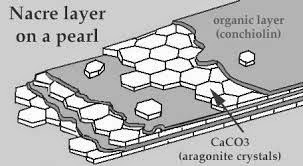
 The process of pearl formation is one of the most interesting phenomenon that mankind has ever come across. Usually when the mollusks open their shells to feed and take oxygen an irritant or a foreign particle enters. This foreign particle enters the reproductive system of the mollusk and causes irritation.  The mollusk responds by secreting a substance called nacre. Secretion results in creation of many concentric layers of nacre, which in due course creates a pearl. The nacre is made up of calcium carbonate and contains a substance which is able to hold the nacre together – chochiolin. Nacre is what gives a pearl its characteristic lustre. Nacre is also known as mother-of-pearl which forms the iridescent lining of the shell.
CULTURED PEARLS
Cultured pearls can be defined as pearls which have been formed with the help of human interference in the natural process. Almost all the pearls which are used for making jewelry today are cultured. Cultured pearls usually are harvested with the help of a process termed as bead nucleation. Also it requires another mollusk which is called the ‘sacrificing mollusk’ and it lends its lining tissue to the other mollusk in which the bead will be planted. Under this process a bead nuclei which is actually a shell, is surgically implanted in the reproductive system of a mollusk know as gonad along with the lining tissue.  This bead nucleus forms the very core of the cultured pearls. This surgery is conducted by experts and it takes a time of 2-6 years to harvest the pearls.
There are two different categories of cultured pearls – saltwater pearls and freshwater pearls.

SALTWATER PEARLS
Saltwater pearls are cultured in water bodies with relatively high salt content like oceans, seas, rivers etc. and take 2-3 years to harvest. There are three types of saltwater cultured pearls:
Akoya Pearls: Akoya pearls are considered to be first completely spherical pearls which appeared in the market in the 1930’s. These pearls have a mirror like lustre and are cultured with the oyster named pinctada fucata martensii which are usually found off the seas of Japan and China. Their size ranges from 2mm – 7mm in diameter. Classic Akoya pearl is white in colour with a pink overtone. Akoya pearls also come in pink, champagne, silver and gold tones. The highest quality of Akoya pearls is called hanadama pearls.

MIRROR LIKE LUSTRE OF AKOYA PEARLS
PINCTADA FUCATA MARTENSII

South Sea Pearls: south sea pearls are majorly cultured in Australia, Indonesia and the Philippines and in the mollusk called pinctada maxima. Their size ranges from 8mm – 18mm and they have a soft, satin like lustre. South sea pearls come in many shades like white, gold, black and black with different overtones.

VARIOUS SHADES OF SOUTH SEA PEARLS
PINCTADA MAXIMA

Tahitian Pearls: these pearls are usually grown in black-lipped oysters called pinctada margaritifera. Tahitian pearls are commonly called black pearls. The body color is usually black with overtones of pink, green, violet and blue. These pearls are usually harvested in Cook Islands and French Polynesia and range from 8mm-17mm.
TAHITIAN PEARLS
PINCTADA MARGARITIFERA

FRESHWATER PEARLS
Freshwater pearls are cultured in freshwater bodies like lakes, ponds and rivers. A freshwater mollusk can produce up to 50 pearls at a time which greatly helps in bringing down the cost of pearls. They are relatively cheaper than saltwater pearls. Also, freshwater pearls do not use a bead nucleus to produce pearls. Rather they use only a piece of lining tissue from freshwater sacrificing mussels, so these pearls are made of 100% nacre and due to this reason they are the closest to natural pearls. The process to harvest these pearls can take as long as 4-6 years. Freshwater pearls have a rather soft lustre. The highest quality freshwater pearls are called freshwater orient pearls. The mussel that produces freshwater pearls is called hyriopsis cumingi and a few other species like margaritifera margaritifera. These pearls are majorly cultured in China and on a smaller scale in US and Japan.
FRESHWATER PEARLS

HYRIOPSIS CUMINGI

Besides, these saltwater and freshwater pearls one might even come across terms like Keshi pearls, Mabe´ pearls or Abalone pearls.

Keshi Pearls: these pearls are accidental by-products of pearl farming and are supposedly formed both in freshwater and saltwater pearls. These pearls form under two circumstances. Firstly, when the bead nucleus is rejected by the mollusk and what remains is the tissue donated by the sacrificing mollusk. As a result, pearl sac is created. Secondly, the donated tissue gets dislodged accidentally and again the pearl sac is formed.


KESHI PEARLS

Mabe´ Pearls: mabe´ pearls are commonly referred to as “half pearls” or “blister pearls”. These are grown in Akoya, South Sea, Tahitian and Freshwater mollusks but the most famous species in which they are grown are- ptera sterna, ptera penguin and pinctada maxima. These are grown in a slightly different manner. The bead nucleus is planted between the outer shell and the inner lining of the shell and hence it grows like a blister. Later, the blister is cut out, the bead is removed and the hollow area is filled with filler and covered with a mother-of-pearl backing. These take 2-3 years to culture and are most suitable for earrings and necklaces.

MABE´ PEARLS

Abalone Pearls: abalone is a single shelled mollusk and is famous for its unusual iridescent colour. Most abalone pearls are baroque (irregular shape). It is difficult to culture abalone pearls because they are haemophiliac. Natural blister pearls form on the shell. They display a beautiful array of colours like pink, green and blue.

ABALONE PEARL


One has to admit that pearls are one of the finest creations of nature. It is a versatile gem and its soft lustre is timeless. Its subdued glow is like the light of the moon and represents delicate emotions like love and romance. Pearls for sure add a magical touch to one’s life.


*The Author is a Colored Stone Graduate from Gemological Institute of America, Mumbai and a Diamond Graduate from Solitaire Diamond Institute, Bangalore. She also holds a Diploma in Jewelry Designing & Manufacturing from Jewelry Product Development Centre, Jaipur. She also blogs at 'The Jewel Affair'

*Picture Courtesy: Google Images

Monday, 25 August 2014

RUBY - The Undisputed King of Gemstones (Part-2)

One of the most important aspects of Gem Identification is the study of inclusions. It is the most fascinating and awe-inspiring experience when one gets to peep inside a stone and look at these marvelous inclusions. Inclusions can be described as a foreign element trapped inside a stone which can give one a clue about the origin, treatments undergone by the stone and it helps in distinguishing between natural stones and its synthetic counter parts.

This post is a continuation of the previous post, Ruby- the Undisputed King of Gemstones. This post will talk in detail about inclusions found in natural and synthetic rubies and its imitations.

Natural Ruby:
The characteristic inclusions of natural ruby include rutile silk which are elongated rutile crystals that give the appearance of needles. In ruby usually there are three sets of needles which intersect each other at an angle of 60°. The arrangement of these needles can cause a phenomenon in corundum, which is the creation of a star. Usually we get to see six-rayed stars and such stones are fashioned in cabochons.


RUTILE NEEDLES


RUTILE SILK


STAR RUBY

Similar looking needles are usually found in Garnets but they are coarser than the rutile needles present in rubies. Boehmite needles are also seen often in rubies.

Crystal inclusions are seen very commonly in rubies. Spinel octahedral crystals, zircon, haematite, calcite, apatite and mica crystals are often found in rubies. Two phase inclusions, three phase iclusions, color zoning – angular, straight and hexagonal are also prominent inclusions.
CALCITE CRYSTALS

ANGULAR GROWTH MARKS

Burma rubies usually display the characteristic silk and apatite and calcite crystals. Fingerprint like inclusions are also common. Thai rubies on the other hand lack the silk in them, instead they have boehmite needles. Color zoning is also a prominent clarity characteristic. Mong Hsu rubies usually tend to have dark cores and they are treated for improved appearance.

COARSE BOEHMITE NEEDLES


FINGERPRINT INCLUSION

Treatments:
Most of the rubies undergo treatment to improve their color and thus marketability. The most common treatment followed worldwide is heat treatment, wherein rubies are heated in furnaces at particular temperature. With the help of this treatment not only the color improves but also the inclusions which affect the clarity of the stone become less visible. But the treatment causes distortion of inclusions. Characteristic inclusions after treatment are-
  • Discoid fractures which result from expansion of crystals due to heat. These are tension fractures with a healing rim.
  • Clouds formed by melting of rutile silk.
  • Broken silk. (these give the appearance of dotted lines)
  • Snowball inclusions caused by melting of crystals.

BROKEN SILK


DISCOID FRACTURE


SNOWBALL INCLUSIONS

In addition to heat treatment sometimes, flux is filled into the fractures to improve the appearance of rubies. When these kinds of rubies are examined under the microscope glassy flux like substance can be seen. 

In other cases dyes are filled into the fractures to improve the color. But sometimes a stone might not have fractures but a poor color, then cracks or fractures are created by rapid heating and cooling and then the dye is introduced. This process is called Quench Crackling.

QUENCH-CRACKLED RUBY


Lattice diffusion is another method in which the stones are exposed to  high heat and chemicals to diffuse another element into the stone which can result in improved appearance. It is usually carried out for stones which do not produce effective results from heat treatment. Lattice diffusion is carried out with two elements chromium and beryllium. Chromium gives rubies a lighter coat of red color whereas beryllium gives them deep orangy red color.

Synthetics:
A synthetic gem can be described as gem which is grown in a laboratory and has the same crystal habitat and chemical composition of their natural counterpart.
Laboratory made rubies are also widely available in the market. It is important for a gemologist to have clear understanding of the various processes used for creating these rubies and how to separate them from their natural counterparts.

Flame Fusion: under this process the powdered chemicals are dropped on a flame and are melted at high temperatures and then left for crystallising. The crystallised mass is termed as boule. Many stones can be cut out from a boule. It is the most commercially viable method of synthesising gems. Typical clarity characteristics of this method are:
  • Presence of gas bubbles
  • Curved growth marks (curved striae)
  • Somewhat an unnatural appearance (mainly uniform color)

CURVED STRAIE AND GAS BUBBLES

FINGERPRINT INCLUSION

Pulling: this method is similar to the flame fusion method. The only difference is that this process uses a template crystal which helps in providing a basic structure for the growth of the synthetic material. The template crystal is attached to the rod which touches the molten chemicals and it pulls out some melt with it. The melt crystallises forming a boule.

Flux Growth: this process is most widely used for producing synthetic emeralds but synthetic corundum is also produced using this process. Here in a crucible, usually made of platinum (to avoid corrosion) is used and flux is filled in. Template crystals are immersed in the liquid chemicals. Crystallisation process takes a long time, sometimes a year also. The cost of production is very high in this method as the equipment is very expensive and the period of production is very long. This process produces characteristic fingerprint inclusions which look very similar to the natural ones.
SYNTHETIC FLUX RUBY

Hydrothermal process: under this method the manufacturers try and replicate the conditions that exist in the structural layers of earth for gem formation. In big containers powdered chemicals are put at the bottom and then they are subjected to high heat and pressure. These containers are filled with water which again is subjected to very high heat and pressure. As the chemicals dissolve they rise where the water is slightly cooler and this is where the crystallisation takes place. Liquid inclusions are usually present in hydrothermal rubies.

Imitations: these can be termed as just mere look alike of a natural gemstone. Imitations can be classified into two categories:
Assembled stones
Look- alike –gems
Assembled stones are prepared by combining two or more different materials. The most common assembled imitations are-

Glass and garnet doublet- the top is usually made of almandite or pyrope- almandite garnet and the base is a glass. The top shows natural inclusion of a garnet and the bottom will show gas bubbles. The separation plane is above the girdle.
GLASS AND GARNET DOUBLET


Synthetic spinel triplet: top and bottom of synthetic colorless spinel and at the girdle is colored cement.

Sapphire and synthetic ruby doublet: top is natural green or blue sapphire and bottom is synthetic ruby.
SAPPHIRE AND SYNTHETIC RUBY DOUBLET

Look-alike-gems: there are many gems which look like natural rubies. Gems like spinel, red garnet, synthetic cubic zirconia and quench crackled quartz.
QUENCH CRACKLED QUARTZ

RED SPINEL

RED SYNTHETIC CUBIC ZIRCONIA

These two combined posts of ruby take us through each and every important aspect and provide the fundamental knowledge about the prized gemstone.
Ruby is a gem which holds the highest position among all other gemstones. Its rich, vivid color leaves one speechless. One can’t help but admire nature’s this awe-striking creation and that is why it is termed as the Undisputed King of Gemstones.


*The Author is a Colored Stone Graduate from Gemological Institute of America, Mumbai and a Diamond Graduate from Solitaire Diamond Institute, Bangalore. She also holds a Diploma in Jewelry Designing & Manufacturing from Jewelry Product Development Centre, Jaipur. She also blogs at 'The Jewel Affair'

*Picture Courtesy: Google Images

RUBY - The Undisputed King of Gemstones (Part-1)

Red is an interesting color with which we correlate our intense emotions. On one hand red denotes happiness, love and passion. On the other hand it signifies obsession, jealousy, anger and fear. Thus, we can say that red is the color of life! Ruby is a gemstone which showcases this color of life and that is why it is termed as the ratnarajor King of Gemstones.


Ruby has been one of the most prized gemstones throughout the history because of its beautiful scarlet hues, its durability and rarity. It has been mentioned of in various sacred texts. Rubies with vivid red hues and large sizes can sometimes claim higher prices than diamonds. The Indian name for ruby is Manak/Manik and it represents Sun in astrology. It is the birth stone for the month of July.

In this post various aspects such as properties, ideal ruby color, ancient and current day sources, inclusions (natural, synthetic and treated rubies) and imitations will be talked about.

PROPERTIES: ruby is the most desirable variety of the mineral group Corundum. It belongs to hexagonal crystal structure and is rated at number 9 on Mohs hardness scale. The refractive index of ruby is 1.76-1.77 with a birefringence of .008-.010. Corundum varieties are made of aluminium oxide. In its purest form corundum is colorless. The trace element which is responsible for ruby’s color is chromium.
 Rubies are formed in two types of deposits:

Marble hosted: in this deposit the host rock is marble and these rubies have less or no iron causing them to fluoresce in long wave UV light. These deposits are usually found in Myanmar, Vietnam and the Himalayas.


MARBLE HOSTED RUBY


Basalt hosted: in this deposit the host rock is basalt. These rubies have higher iron content giving them a brownish appearance. These rubies show faint or no fluorescence in UV light. These rubies are usually heat treated to improve their color. Basalt hosted deposits are formed mostly in Thailand and Cambodia.

BASALT HOSTED RUBY

Ruby displays pleochroism under a dichroscope. It shows two distinct tones- orangy red and purplish red and specific gravity of ruby is 4.

COLOR: the factor that has the strongest influence on the market value of a ruby is its color. The intensity or the saturation of ruby’s color is dependent on the chromium content. Higher the content, higher is the saturation of ruby.

 “Pigeon blood” is the term usually associated with fine ruby color. Fine color displays vivid red hues (primary hue) with hint of orange or purple (secondary hue) in it. As the intensity of secondary hues increases, the value of ruby declines. Tone is a very important factor to consider when judging the color of a ruby. If the tone is too light then it might be considered as a pink sapphire rather than a ruby. Similarly if purple or orange is too dominant in a corundum stone it will be termed as purple and orange sapphire respectively. It is often very difficult to draw a line between ruby and pink sapphires and the topic has been highly debatable.

ORANGE SAPPHIRE


PURPLE SAPPHIRE

PINK SAPPHIRES

SOURCES: The most important historic source of ruby is Mogok in Myanmar. The rubies in this region are marble hosted, display a striking deep red body color and fluoresces red under UV light. Rutile silk is the most dominant inclusion in Mogok rubies.
The second most important source which has provided good commercial quality rubies to the market is Mong Shu in Myanmar. The rubies from this region are also marble- hosted but generally have an extremely saturated color with a red rim. These rubies are usually heat treated for improved appearance. After the treatment the natural inclusions are usually distorted.
 Political unrest in Myanmar leads to irregular production and supply. Though it is the most important source of ruby mining but these factors limit the miners to exploit the potential mines completely.

MINING IN MYANMAR

Thailand is also amongst world’s major ruby sources. It is the largest trading and cutting centre for rubies. Thai rubies are basalt-hosted and hence brown in color and lack fluorescence. These rubies are heat treated for improved appearance. Ruby deposits are spread all over Thailand but the most commercially viable sources are in the Chantaburi. Cambodia is also an important ruby source.


THAI RUBIES

Sri Lanka has corundum bearing deposits and they mostly produce pink sapphires, blue sapphires and other fancy colors. Vietnam is also a very promising source of ruby. In Africa, Kenya sometimes can produce fine color rubies. Afghanistan, Pakistan and Nepal also have ruby bearing deposits but mostly suitable for cabochons.


Part-2 of this article will cover interesting topics like inclusions of natural, synthetic and treated rubies and imitations.


*The Author is a Colored Stone Graduate from Gemological Institute of America, Mumbai and a Diamond Graduate from Solitaire Diamond Institute, Bangalore. She also holds a Diploma in Jewelry Designing & Manufacturing from Jewelry Product Development Centre, Jaipur. She also blogs at 'The Jewel Affair'

*Picture Courtesy: Google Images


Wednesday, 20 August 2014

difference between Silver and Platinum

Interesting facts about the difference between Silver and Platinum
Article by: Asha Jain
Student, Solitaire Diamond Institute


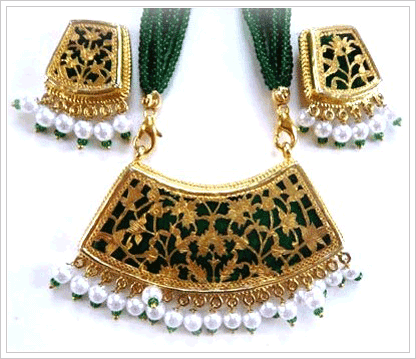
Thewa Jewellery


Thewa is a traditional art of fusing 23K Gold with multicoloured glass. The glass is treated by a special process to have glittering effects, which in turn highlights the intricate gold work. The whole Thewa piece is hand crafted over a period of one month by skilled artisans. Thewa, an art that pulsates with life, caught seemingly in movement, which shows the culture, heritage and tales of romance and valour of Rajasthan with nature and happiness depicting the art of the fine craftsmanship. The process of making thewa work is detailed; time consuming and intricate, taking up to a month to complete each piece.